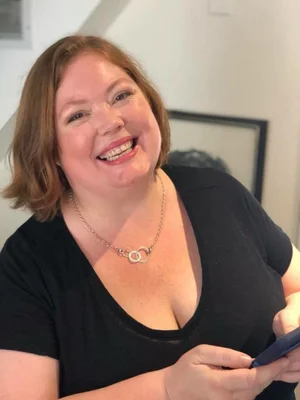
Conversation with Tanesha Wilcox, Embodiment Coach
What do you do?
I help people come home to themselves—and a big part of that is coming back into relationship with the body.
Through Phoenix in the Oak, my work brings together massage and bodywork, movement and the neurology of how our bodies move and respond, emotional awareness, thought patterns, embodiment, coaching, and community. I’m interested in the whole person and the ways our experiences, thoughts, emotions, protective patterns, and physical bodies are constantly in conversation with one another.
Sometimes that work happens through touch. Sometimes it’s noticing the way we move, brace, hold, or protect. Sometimes it’s becoming curious about a thought or emotional pattern and recognizing how it shows up in the body.
None of those responses make us bad, broken, or something that needs to be “fixed.” They’re parts of us that we can learn to listen to and come back into relationship with.
For me, the goal isn’t to feel 100% every day or to eliminate every uncomfortable sensation, emotion, or pattern. It’s to create more relationship with ourselves—even with the things that don’t feel good—so that we have more choice in how we respond.
That relationship creates space for more freedom, self-trust, and the remembering of who we are beneath all the ways we’ve learned to survive, adapt, and protect ourselves.
Why do you do it?
Because I know how easy it is to become disconnected from yourself while doing everything you’re “supposed” to do.
So many of us have learned how to perform, provide, caretake, push through, hold it together, and keep going without ever being taught how to actually be with ourselves. And then we wake up one day wondering why we got here and why, if everything looks good on paper and nothing is "technically" wrong, why do we feel this way?
I believe healing is, in many ways, an act of remembrance. We aren’t always becoming someone new. Sometimes we’re remembering who we were before the world told us who we needed to be.
I do this work because I want people to have spaces where they don’t have to hide the messy, complicated, tender, angry, uncertain, joyful, still-figuring-it-out parts of themselves. Spaces where they can be witnessed, supported, challenged with love, and reminded that they don’t have to navigate any of this alone.
What’s your favorite practice?
My favorite practice is how I begin my day.
Whenever I can, I’m very intentional about waking up slowly. Before I even open my eyes, before the to-do list gets a chance to introduce itself, I come into my body. I notice the sensations of being here. Of being in this body. And I take a moment to recognize what a gift that is.
Some mornings, life is life! I’m helping my husband get ready and out the door, and there isn’t a perfectly slow, quiet beginning. But even then, I try to ritualize my morning wherever I can.
Stirring my coffee can be a ritual. Returning to my breath can be a ritual. My shower can be a ritual. Those ordinary moments become little opportunities to come back to myself before I pick up my phone, check messages, begin working, or start giving my energy to the rest of the world.
Instead of beginning my day with, “Okay, what do I have to do?” I try to begin with, “What do I need? What does my body need? What does my soul need?”
I fill my cup first.
Then my day gets to be tended to from the overflow.